Munch
A year of dinners, read at a glance.
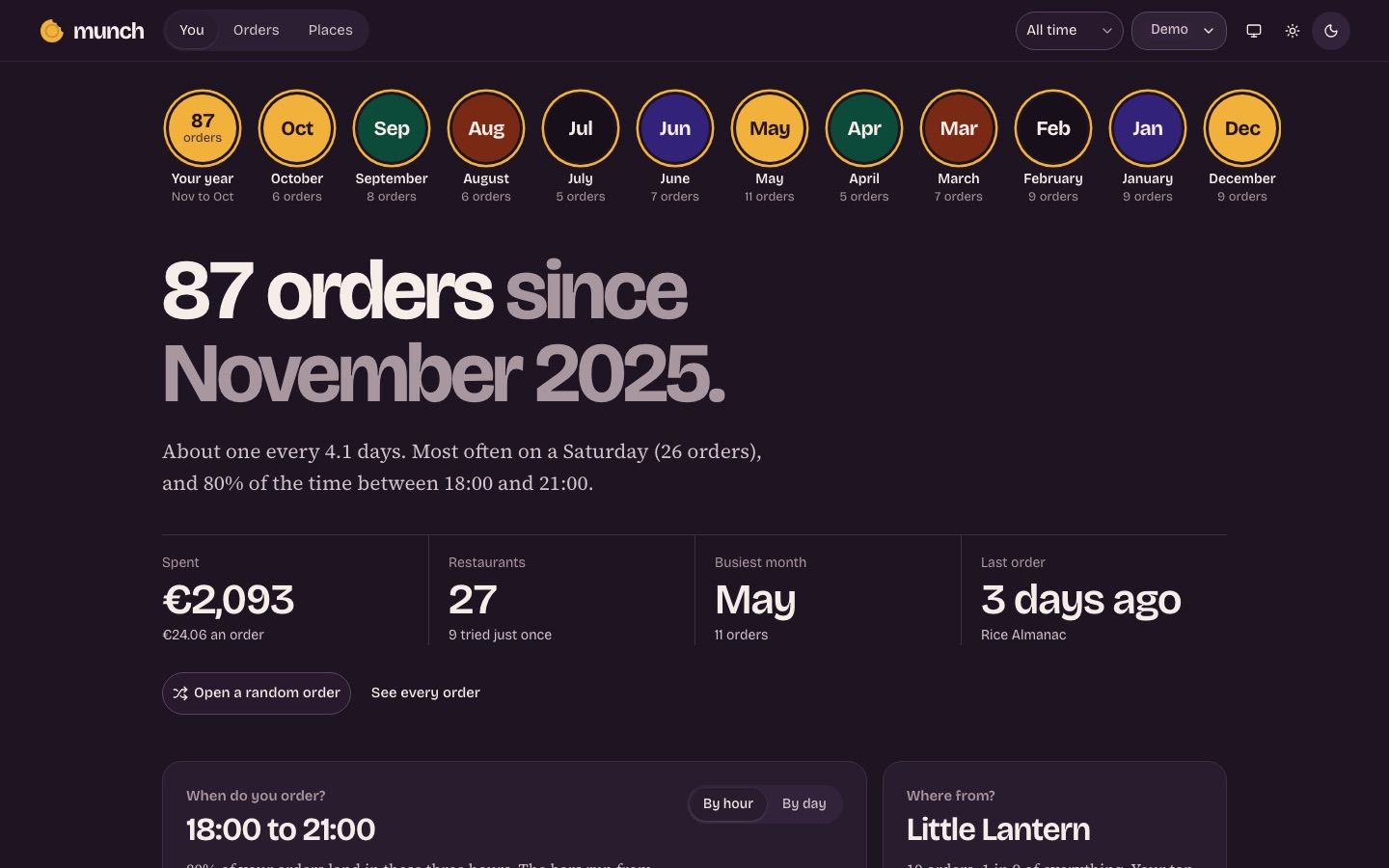
Screenshots use a fictional demo person, with made-up orders from made-up restaurants.
The problem
A delivery app knows a lot about your evenings: the nights you couldn't face cooking, the place you quietly stopped ordering from, how much of each order went on fees. All it gives you back is a list of receipts, newest first, and you can't read a list of receipts as a year.
What I did
A small Bun command-line tool fetches your own order history with your own signed-in session. It makes one polite request at a time and keeps the session in memory, never on disk.
Raw responses are saved first and normalised into one JSON file afterwards, so a parser fix never needs a refetch. Names, phone numbers and street addresses are dropped on the way.
The web app opens that file in your browser, and nothing is uploaded. One TypeScript core holds the schema, the analysis and the predictions, shared by the command line, the tests and the page.
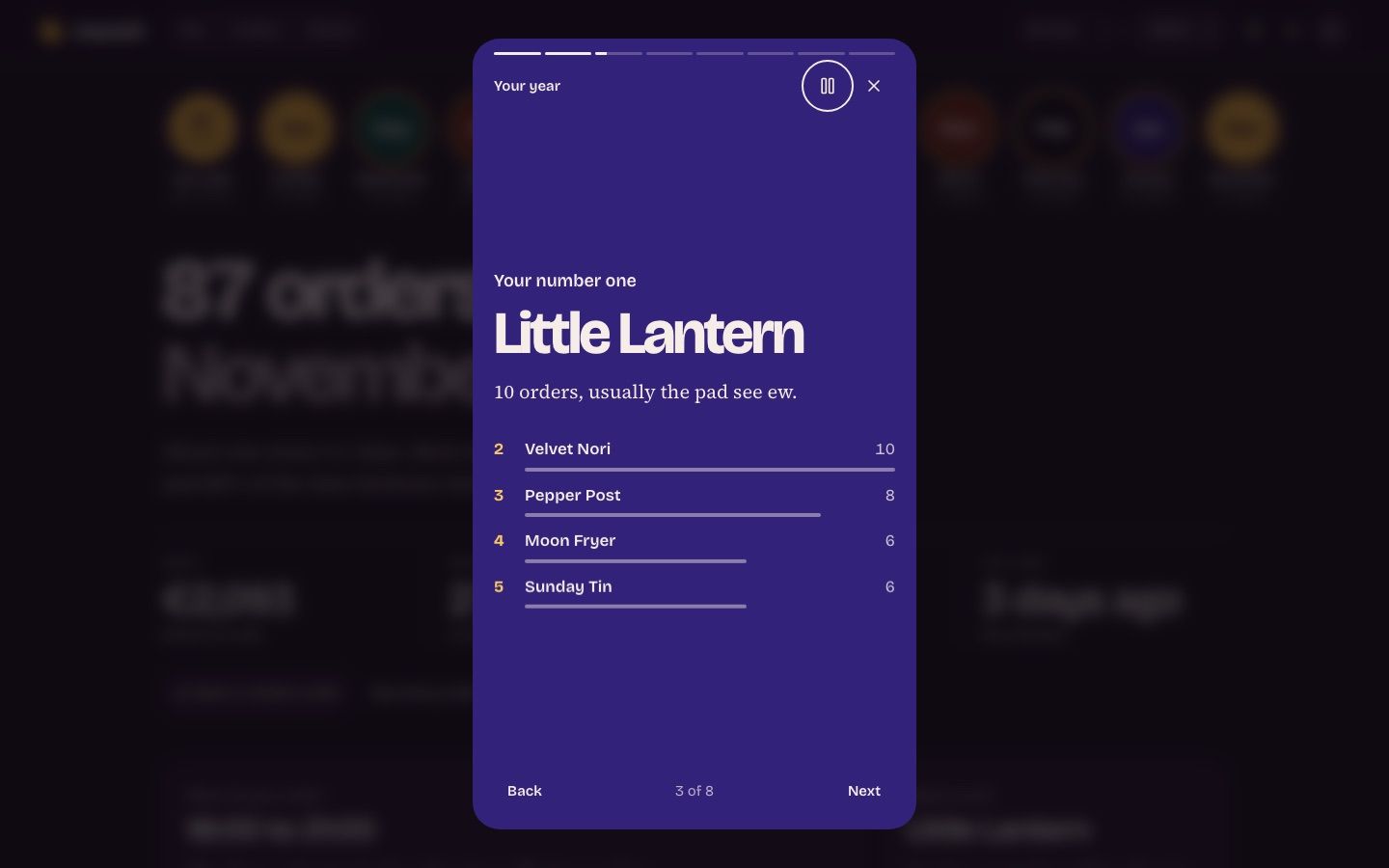
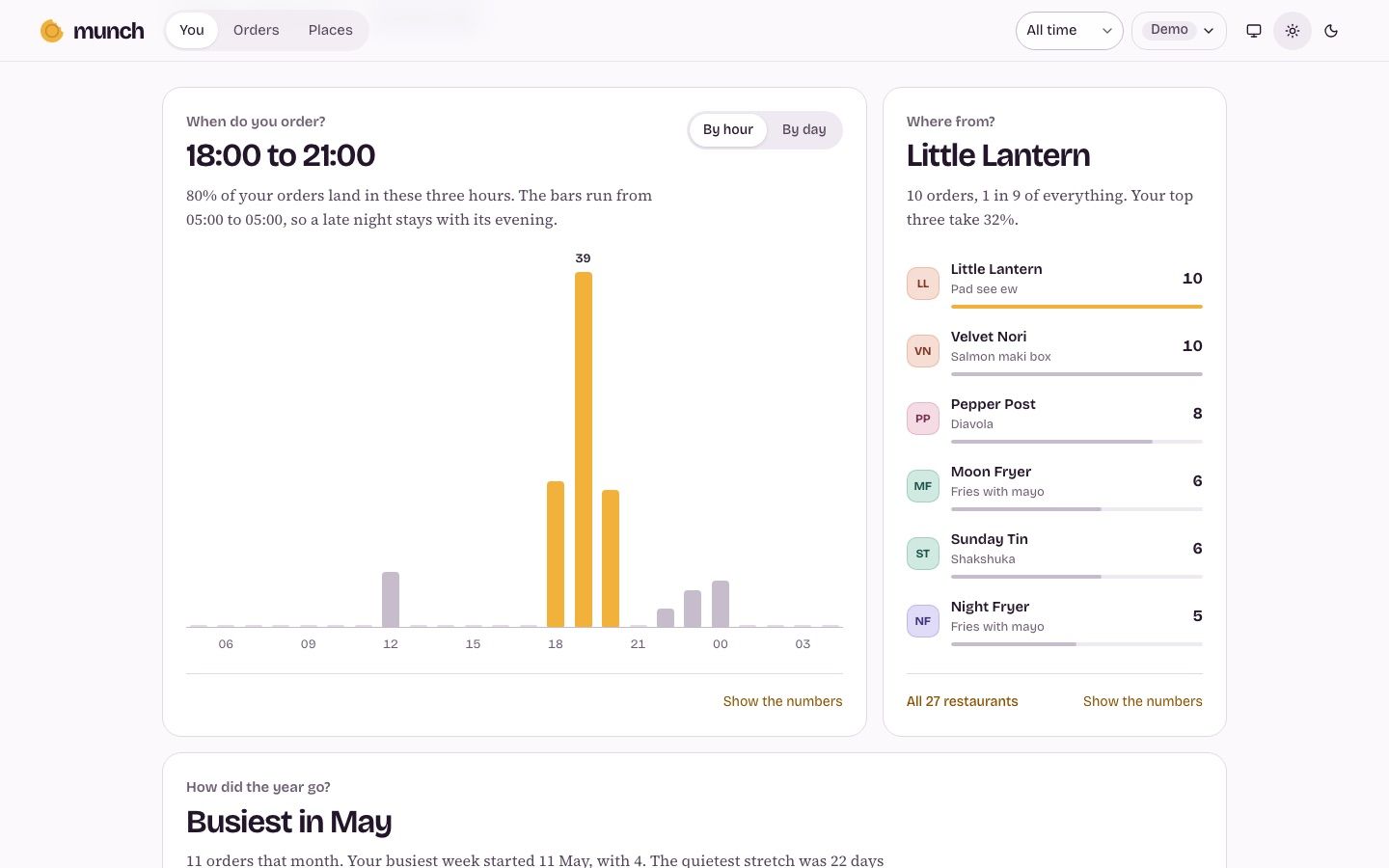
Story rings play your year, then each month. Question cards answer one thing each in large type, with small hand-built charts underneath, and every bar opens the orders behind it.
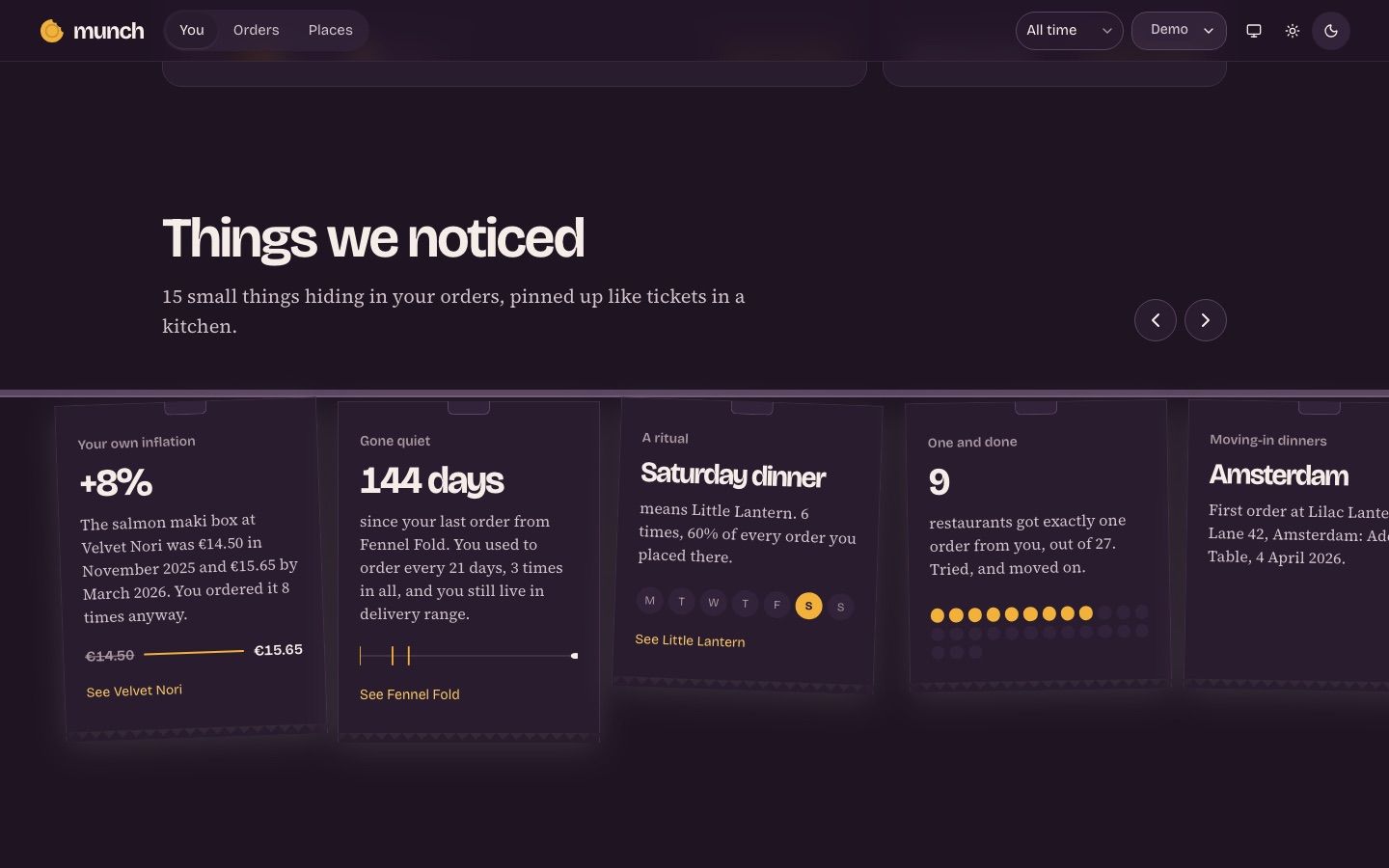
Findings are pinned up like kitchen tickets, shown only when your history supports them, next to an order type (night owl, regular, explorer) and a guess at your next order with its honest hit rate.
Making it fast and sturdy
The app used to ship as one 885 KB script. Now each page loads its own code once your data is ready, so the start page downloads about 195 KB compressed instead of 280 KB.
Screenshots moved from JPEG to WebP at the size they are shown, from 655 KB down to 138 KB. Build files are cached for a year, so a second visit only fetches the page itself.
The animations stayed, but nothing waits more than 150 ms to start. On a simulated mid-range phone, the Lighthouse score went from 84 to 91 and the first load from 754 KB to 423 KB.
The story player works from the keyboard wherever focus is, Escape returns you to the ring you opened, and holding to pause no longer skips a slide.
“Today” and “yesterday” now count calendar days in Amsterdam time. Every push runs the type check, 47 tests and both builds before Cloudflare gets the new version.
How it turned out
A live demo with a made-up person's year of orders, and a tool I run on my own. Thuisbezorgd keeps about a year of history, so Munch is designed around a year: weeks rather than months, and months as stories.